
Explainer
What Is the Honest Trade-Off With a 6" Lift?
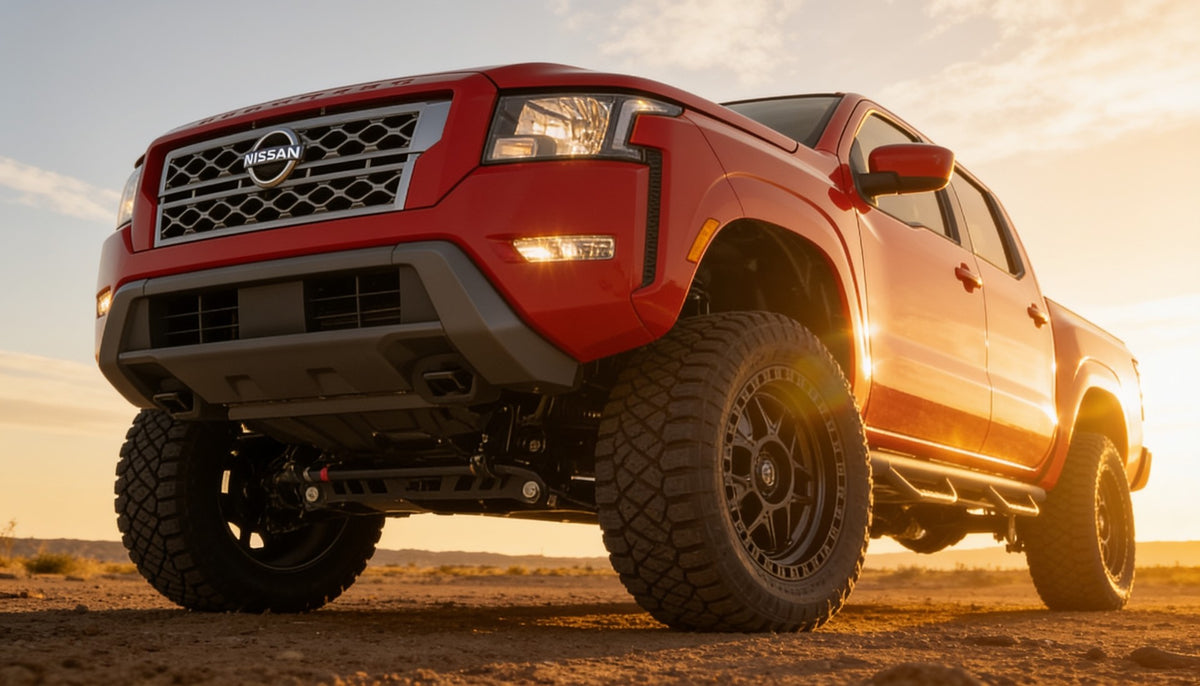
Six-inch lift kits often get a bad reputation in the truck and SUV world. You will hear people say that a 3" lift is better, more practical, or that a 6" lift is simply "too much."
The truth is a little more complicated.
A 6" lift can have some real advantages over a 3" lift, especially when it comes to tire clearance, ground clearance, and off-road capability. But not all 6" lift kits work the same way, and the type of lift you choose can make a huge difference in how your truck performs.
The biggest question is this: how does the lift actually create 6" of lift height?
There are two very different approaches: bracket-style lifts for 4WD trucks and lift spindles for many 2WD trucks.
Why Run a 6" Lift?
The most obvious advantage is tire clearance.
A 6" lift gives you considerably more room for larger tires and can reduce the rubbing and clearance issues that sometimes come with trying to fit large tires on a 3" lift.
The additional ride height can also provide:
- Better approach and departure angles
- More body clearance over obstacles
- More room for larger tires
- Increased clearance for certain off-road applications
- More ground clearance depending on the type of lift
But there is an important distinction: a 6" lift does not automatically mean you have 6" more ground clearance underneath the truck.
This is where the type of lift becomes extremely important.
6" Bracket Lifts: The 4WD Solution
For many 4WD trucks, a bracket-style lift kit is the traditional way to achieve approximately 6" of suspension lift.
Brands such as Rough Country use a system of large brackets and crossmembers to relocate the front suspension components and differential.
Why is this necessary? Your front differential is connected to the front axle shafts. If you simply moved the suspension components down six inches without addressing the differential and axle angles, you could create severe geometry problems.
A bracket lift essentially lowers the front suspension and differential together to maintain more appropriate axle angles.
How a Bracket Lift Works
A typical 6" bracket lift can relocate components such as:
- Lower control arms
- Front differential
- Hubs
- Brake assemblies
- Struts or coilovers
- Sway bar mounting points
Large crossmembers and brackets are installed underneath the truck to support and relocate these components. Depending on the vehicle and kit, cutting or modification of the factory crossmember area may be necessary to install the brackets.
The Big Trade-Off With a Bracket Lift
Here is the part that is often overlooked when shopping for a 6" lift.
The front differential and crossmember are moved downward. That means the lowest point underneath the truck may not be six inches higher than it was before.
In fact, when comparing trucks running the same size tires, a bracket-lifted 6" truck can have approximately the same underbody clearance at its lowest point as a truck with a 3" lift.
So while the truck may sit much higher and have more tire and body clearance, the large crossmember underneath can become the new low point.
Think of it this way: the truck is higher, but some of the suspension components have been moved lower. That is the major trade-off.
What About the Large Strut Spacers?
You will often see large spacers included with bracket-style lift kits. These can be misunderstood.
They are not necessarily providing the entire six inches of lift. When the suspension is relocated downward, a gap is created between the factory-length strut and its new mounting location. The spacer is used to fill that gap created by lowering the struts.
Longer struts or coilovers are available to avoid the necessity of large spacers.
2WD Trucks Have a Different Option
This is where 2WD trucks can have a significant advantage.
If a quality lift spindle is available for your specific truck, a 6" lift can be achieved without lowering the entire front suspension assembly. Companies such as MaxTrac manufacture lift spindles for certain applications.
Instead of lowering the control arms and differential, a lift spindle relocates the wheel hub and brake assembly lower in relation to the suspension while keeping the rest of the components in the stock location. This is why the factory struts, without the need for spacers, and the factory sway bar endlinks can be retained.
The Result
You can achieve approximately six inches of lift at the wheel while keeping the large suspension components from hanging down underneath the truck.
And because there is not a large drop-down differential crossmember, you can retain significantly more underbody clearance than you would with a traditional bracket-style lift.
Most Trophy Race Trucks Are 2WD
There is a reason you will see spindle-based suspension designs used extensively in off-road and trophy-style race trucks.
Keeping the major suspension components higher in the chassis can provide valuable clearance underneath the truck. Instead of lowering the entire front suspension to create lift, the spindle changes the relationship between the wheel hub and the suspension.
That allows the truck to sit higher while keeping the chassis and major suspension components relatively high. For a long-distance, off-road, desert-focused build, that can be a major advantage.
So Which 6" Lift Is Right for You?
There is not one universal answer. It depends heavily on whether your truck is 2WD or 4WD, how you use it, the tire size you want to run, and what matters most to you.
A 6" Bracket Lift May Make Sense If:
- You have a 4WD truck
- You want substantially more tire clearance
- You want the appearance of a tall truck
- You want a readily available complete 6" system for your application
- You understand that the front differential and crossmember will be relocated downward
A 6" Spindle Lift May Make Sense If:
- You have a 2WD truck
- A spindle lift is available for your specific application
- Maximum underbody clearance is important
- You want to keep the factory suspension components higher
- You are building a truck with off-road performance in mind
The Honest Answer
A 6" lift is not necessarily better or worse than a 3" lift. They are designed around different compromises.
A 3" lift can provide a great balance of tire clearance, handling, ride quality, and practicality. A 6" lift can give you more room for larger tires and a taller stance, but the way that additional height is created matters.
On a 4WD truck using a traditional bracket-style lift, the front differential and crossmembers are lowered to maintain suspension geometry. That can limit the actual ground clearance underneath the truck.
On a 2WD truck equipped with a properly designed lift spindle, the wheel hub can be relocated without dropping a large crossmember underneath the truck. This can provide a significant clearance advantage.
So when you are shopping for a 6" lift, do not just ask, "How much lift does it give me?" Ask: "Where does that lift come from, what happens to my suspension components underneath the truck, and is it still advantageous?"
At High Road Suspension, our goal is to help you understand how different suspension systems actually work so you can choose the setup that makes sense for your truck and how you use it.
Frequently Asked Questions
Does a 6-inch lift give me 6 inches of ground clearance?
Not necessarily. A 6" lift raises the body and makes room for larger tires, but it does not automatically add six inches of clearance under the truck. On a 4WD bracket lift, the differential and crossmember are moved down with the suspension, so the lowest point underneath can end up roughly where a 3" lift would leave it.
What is the difference between a bracket lift and a spindle lift?
A bracket lift relocates the entire front suspension and differential downward using large brackets and crossmembers, which is how most 4WD trucks reach 6 inches. A spindle lift, available for some 2WD trucks, relocates the wheel hub lower in relation to the suspension while leaving the control arms, differential, struts, and sway bar endlinks in their factory positions.
Why do bracket lift kits come with large strut spacers?
The big spacers are often misunderstood. They are not providing the whole six inches of lift. When the suspension is relocated downward, a gap opens between the factory-length strut and its new mount, and the spacer fills that gap. Longer struts or coilovers are available to avoid needing large spacers.
Is a 6-inch lift better than a 3-inch lift?
Neither is simply better. They are built around different compromises. A 3" lift tends to balance tire clearance, handling, ride quality, and practicality. A 6" lift offers more tire room and a taller stance, but how the height is created, bracket versus spindle, determines what you actually gain underneath the truck.
Why are most trophy and desert race trucks 2WD?
Spindle-based designs let the truck sit tall while keeping the major suspension components and chassis high, rather than dropping a large crossmember down to create lift. That extra underbody clearance is a real advantage for high-speed, long-distance desert driving, which is why you see the spindle approach used so often on race-style trucks.
More Install Guides

Best Struts, Coilovers, and Rear Shocks for a Nissan Titan XD
From budget Bilstein struts to premium King coilovers, here's how the suspension options for the Nissan Titan XD compare, and which one f...
Read the guide ›
How to Protect Your Coilovers and Shocks: Limit Straps, Bump Stops, and Covers
Your coilovers and shocks work hard and cost real money. Here's how limit straps, bump stops, and covers protect them through the full ra...
Read the guide ›
What Are Bump Stops and When Do You Need Them?
Bump stops are the last line of defense against a bottomed-out suspension. Here's what they do, the different types, and which one fits h...
Read the guide ›