
Explainer
What Are Bump Stops and When Do You Need Them?
What Are Bump Stops?
Bump stops limit the amount of compression an axle or control arm can have. Most vehicles are already equipped with front and rear bump stops. When you lift your vehicle or push it beyond normal street-driving conditions, you should consider taller bump stops, different bump stop locations, or, depending on your needs, a different type of bump stop.
Why Do You Need Them?
As mentioned, bump stops limit the amount of final compression by absorbing the kinetic energy that would otherwise cause damage. This is important to prevent destructive metal-on-metal contact between the frame and axle, or the frame and control arms. Metal-on-metal contact could crack welds and de-arch leaf springs.
Limiting upward travel is also important to protect struts, coilovers, or rear shock absorbers. The bump stop prevents the coilover or shock absorber from bottoming out, which would cause damage to the shock shafts and internal seals.
What Types of Bump Stops Are There?
Factory bump stops tend to act more like a protective barrier against damage, whereas other bump stops absorb some or all of the energy before impact.
Bump stop spacers: These mount underneath the factory bump stops to raise the factory bump stops after the vehicle has been lifted.
Cone bump stops: These are taller and can easily be cut down to custom lengths. They tend to be more rubber-like, and the cone shape provides a progressive rate of compression that absorbs more than factory bump stops.
Foam bump stops: Microcellular foam often provides a more progressive feel because internal air pockets collapse sequentially, offering a smoother initial engagement before firming up.
Progressive air dampening bump stops: These are often vehicle-specific, and they are what most drivers demand. Progressive compression is an advancement over linear stops. A progressive stop is designed to engage earlier in the suspension cycle, gently assisting the main spring to manage body motion before full bottom-out occurs. This design helps mitigate excessive chassis pitch and roll during hard braking or cornering by adding resistance just before the primary springs become overwhelmed.
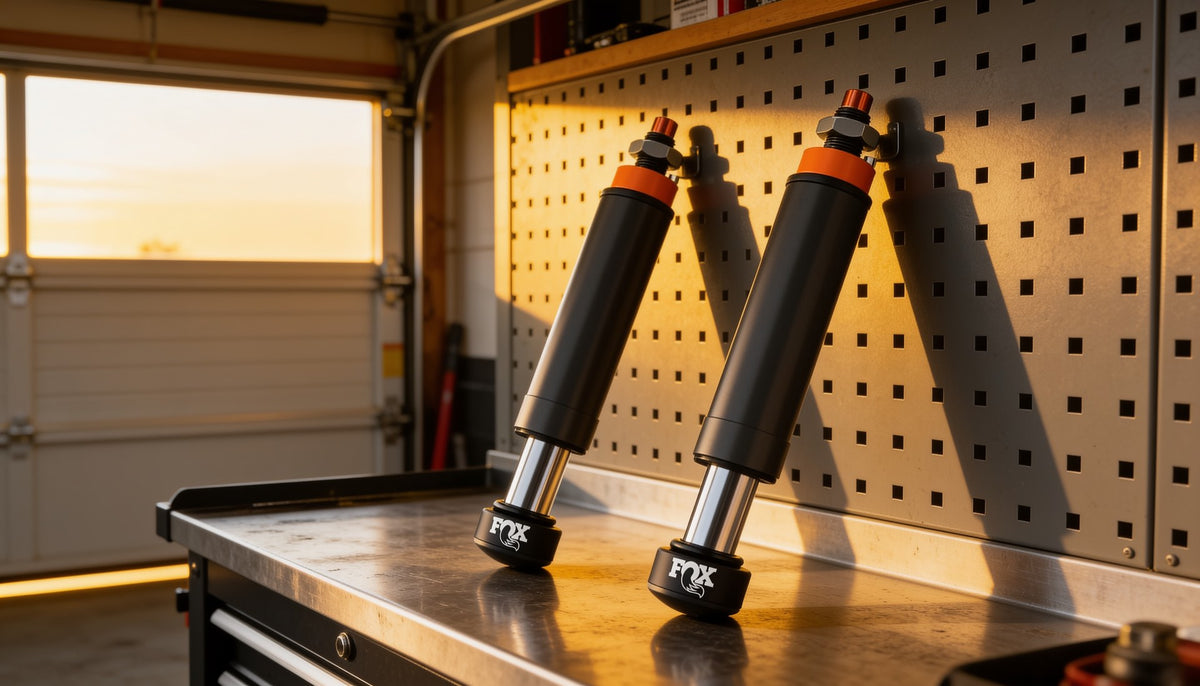
Hydraulic bump stops: For high-performance applications such as heavy off-roading or serious overlanding, conventional bump stops are often replaced with active hydraulic bump stops. These are essentially small, oil-filled shock absorbers that use a piston and valving to manage compression speed. Hydraulic stops provide controlled, tunable damping force that dissipates energy through fluid movement and heat, offering smoother bottom-out protection than solid bump stops. They act as an auxiliary spring that can be tuned by adjusting the internal pressure, allowing you to control the amount of force and the speed at which the final inches of suspension travel are managed.
Determining Where to Mount Them
Cone bump stops, foam bump stops, and progressive bump stops traditionally mount in the same spots as the factory bump stops. Hydraulic bump stops can be mounted anywhere on the vehicle. This versatility is important because there are more variables to consider with hydraulic bump stops, such as compression rates.
Clearance: When determining your mount location, clearance is the first thing to consider. Allow enough room for articulation angles and consider turning radius. Consider upward travel, if you allow too much upward travel, the tires may hit the fenders.
Striking location: Often the rear hydraulic bump stops are mounted to the rear frame and are designed to hit the axle at maximum compression. Consider incorporating striking plates on the rear axle. Set the front hydraulic bump stops so they will hit the striking pad on the lower arms.
Compression: It is nearly impossible to determine maximum compression on a fully charged coilover and hydraulic bump stop. Simply using a floor jack and the weight of the vehicle is not enough to determine maximum compressibility, because kinetic energy is not considered. It is recommended to discharge the nitrogen from the coilover or shock absorber and the hydraulic bump stop when setting up compression.
Which One Is Right for You?
The best choice ultimately depends on what you want from your truck or SUV. For most drivers who stay on the road under normal conditions, bump stop spacers or cone bump stops are adequate. For those who do light off-roading, a progressive air dampening bump stop is the best choice. And for those who push their vehicles hard off-road, a hydraulic bump stop is the best choice.
Bump stops are one piece of protecting your suspension. They guard against over-compression, while limit straps guard against over-extension. For the full picture on protecting your coilovers and shocks, see our guide on how to protect your coilovers and rear shocks.
At High Road Suspension, we believe the right suspension setup depends on how you want to use your vehicle. A bump stop spacer can be the perfect solution for one truck, while a hydraulic bump stop may be a much better choice for another.
If you are unsure which option is right for your vehicle, feel free to reach out to us. We are happy to help you choose a suspension setup that fits your truck, your budget, and the way you drive it.
Frequently Asked Questions
What do bump stops actually do?
Bump stops limit how far your suspension can compress and absorb the energy at the end of that travel. They prevent destructive metal-on-metal contact between the frame and axle or control arms, and they keep your struts, coilovers, and shocks from bottoming out, which would damage the shock shafts and internal seals.
Do I need taller bump stops after lifting my truck?
Often, yes. Lifting changes your suspension's operating range, so the factory bump stops may no longer engage at the right point. Bump stop spacers raise the factory stops to the correct position after a lift, and taller cone or progressive stops can further tune the final travel.
What is the difference between a cone, foam, progressive, and hydraulic bump stop?
Cone and foam stops are progressive rubber/foam pieces that firm up as they compress. Progressive air-dampening stops engage earlier to help control body motion during braking and cornering. Hydraulic bump stops are small oil-filled shocks that are tunable and provide the smoothest, most controlled bottom-out protection, best for serious off-road use.
Which bump stop is right for a street-driven truck?
For a truck that mostly sees normal road driving, bump stop spacers or cone bump stops are usually all you need. You would step up to progressive air-dampening stops for light off-roading, and hydraulic stops for aggressive off-road use.
Do bump stops affect ride quality?
They can. A progressive or hydraulic bump stop engages more smoothly than a hard factory stop, so instead of a jarring hit at the end of travel, the suspension firms up gradually. On rougher terrain, that smoother engagement noticeably improves how controlled the truck feels.
More Install Guides

Best 3" Lift Kit for the 2017-2024 Nissan Armada
A 3-inch lift is the sweet spot for the Armada, but there are many ways to build one. Here's every kit option compared, from budget to Ki...
Read the guide ›

ICON Stage 1 vs Stage 12: Understanding ICON Suspension Stages
ICON offers anywhere from a few stages to more than a dozen. Here's what each one actually adds, and why the most expensive package usual...
Read the guide ›
Upper Control Arms for the Toyota Tundra: Buyer's & Install Guide
Lifted your Tundra and been told you need aftermarket upper control arms? Here's why, how the top brands compare, and how to install them.
Read the guide ›