
Explainer
ICON Stage 1 vs Stage 12: Understanding ICON Suspension Stages

If you are shopping for an ICON suspension system for your truck, you may be surprised by how many different packages are available. Depending on the year, make, and model of your truck, ICON may offer anywhere from a few different stages to more than a dozen.
At first glance, the difference between a Stage 1 and a Stage 12 kit can be confusing. If you are not familiar with suspension components, it can be difficult to understand why one package costs significantly more than another, or whether you actually need the additional equipment.
The good news is that you do not necessarily need the highest stage available.
ICON's different stages are designed to progressively add suspension performance, adjustability, durability, and off-road capability. As you move up through the stages, you generally receive larger and more capable shocks, additional suspension components, greater adjustability, and improvements in suspension travel and articulation.
The right package depends on how you use your truck, how much off-roading you do, whether you tow or haul, and how much adjustability you want.
Before getting into the individual stages, it helps to understand some of the terminology.
Understanding the Basics
What Is a Coilover?
A coilover combines a coil spring and shock absorber into one assembly. The coil spring supports the weight of the vehicle, while the shock absorber controls how quickly the suspension moves. If you want a fuller breakdown of how these differ from a basic strut, see our guide on the difference between a coilover and a strut.
ICON coilovers, which you can browse here, are designed specifically for the application and are available in different sizes and configurations. As you move into higher stages, you will see larger shock bodies and external reservoirs.
What Is an Oil Reservoir?
A shock absorber uses oil to control suspension movement. When a shock works hard, especially during repeated bumps and impacts off-road, the oil can become hot. As the oil temperature increases, the shock can lose some of its performance.
A reservoir provides additional oil capacity and helps dissipate heat. This allows the shock to perform more consistently during extended off-road driving.
In simple terms: more demanding driving means more heat, and the harder you work a shock, the more you benefit from an external-reservoir design.
What Does "Adjustable Damping" Mean?
Damping controls how quickly the suspension moves.
An adjustable shock allows you to change how the suspension feels. You can make the suspension softer for certain driving conditions or firmer when you need additional control, such as when towing, hauling, or driving aggressively off-road.
Some ICON shocks use manual adjustment knobs, while higher-end systems can use electronic adjustment that can be controlled from inside the truck.
ICON Stage 1
A Stage 1 kit is generally the entry point into ICON's suspension lineup.
A typical Stage 1 system includes internal-reservoir coilovers and internal-reservoir rear shocks.
This is a significant upgrade over many factory suspension systems and is a good option for someone who wants improved ride quality and suspension performance without paying for all of the additional features found in the higher stages.
Stage 1 is a good choice if:
- You primarily drive on the street.
- You occasionally drive off-road.
- You want better ride quality and suspension performance.
- You do not need extensive shock adjustability.
- You want an entry-level ICON suspension system.
For many truck owners, Stage 1 provides everything they actually need.
ICON Stage 2
Stage 2 generally upgrades the shocks to external-reservoir coilovers and external-reservoir or piggyback rear shocks.
The biggest advantage is additional oil capacity and improved heat management. This makes the suspension better suited to repeated impacts and more demanding off-road use.
Stage 2 is a good choice if:
- You regularly drive off-road.
- You want better shock performance during extended off-road driving.
- You frequently drive on rough roads or trails.
- You want additional cooling capacity without moving into the more expensive adjustable systems.
ICON Stage 3
Stage 3 builds on Stage 2 by adding damping adjustment.
The shocks include adjustment knobs that allow you to change how the suspension responds. For example, you may prefer a softer setting for normal street driving and a firmer setting when towing, hauling, or driving aggressively off-road.
This does not change the amount of lift your truck has. Instead, it changes how the shock controls the suspension.
Stage 3 is a good choice if:
- You want to fine-tune your ride quality.
- Your truck sees both street and off-road use.
- You tow or haul different loads.
- You want more control over how the suspension feels.
ICON Stage 4
Stage 4 generally includes the features of Stage 3 while adding billet upper control arms equipped with ICON Delta Joints.
The upper control arm is an important part of the front suspension. When a truck is lifted, the factory control arms may not provide the same amount of suspension movement or geometry that an aftermarket arm can provide. Aftermarket upper control arms can improve suspension articulation and help accommodate the changes created by a lift. If you want a deeper look at control arm options, our upper control arm guide breaks down the brands and joint types.
ICON's Delta Joint is designed for durability and increased articulation. ICON rates the joint for long-term service and backs it with a 5-year replacement warranty.
Stage 4 is a good choice if:
- You are looking for additional front suspension articulation.
- You want upgraded upper control arms.
- You regularly take your truck off-road.
- You want adjustable shock damping along with upgraded suspension components.
ICON Stages 5 to 12 for the 2022+ Toyota Tundra
The following stages are specific to the 2022 and newer Toyota Tundra and progressively add larger shocks and additional suspension components.
Instead of thinking of these stages as completely different suspension systems, think of them as building blocks. Each stage adds another component or upgrade to the previous stage.
ICON Stage 5
Stage 5 includes:
- 2.5" body internal-reservoir front coilovers
- Billet upper control arms
- Sway bar drop kit
- 2" body external-reservoir rear shocks
This package is a substantial step up from the earlier stages. The larger 2.5" front coilovers provide greater shock capacity, while the external-reservoir rear shocks provide additional oil capacity and cooling. The sway bar drop kit helps maintain proper suspension geometry after lifting the truck.
Stage 5 is a good choice if you want a more serious off-road suspension system with larger shocks and upgraded suspension components, but you do not need every available upgrade.
ICON Stage 6
Stage 6 includes everything in Stage 5 but upgrades the front coilovers to 2.5" body external-reservoir coilovers.
The external reservoir provides additional oil capacity and improves the shock's ability to manage heat.
Stage 6 is a good choice if you spend more time off-road and want the additional cooling and performance provided by external-reservoir front coilovers.
ICON Stage 7
Stage 7 includes everything in Stage 6 but upgrades the rear shocks to 2.5" body external-reservoir shocks.
Now both the front and rear of the truck benefit from larger external-reservoir shocks.
Stage 7 is a good choice if you want a well-balanced, high-performance suspension system with larger external-reservoir shocks at both ends of the truck.
ICON Stage 8
Stage 8 includes everything in Stage 7 and adds a billet lower link kit.
The lower links are part of the rear suspension and help control the movement of the rear axle. Upgraded links can provide additional strength and help increase suspension articulation.
Stage 8 is a good choice if you are looking for greater rear suspension articulation and are using your Tundra for more serious off-road driving.
ICON Stage 9
Stage 9 includes everything in Stage 8 but upgrades the coilovers with Compression Damping Control Valve (CDCV) technology.
CDCV adds external adjustment knobs that allow you to change the shock's compression damping. This gives you considerably more control over how your suspension behaves. For example, you may want one setting for everyday driving, another for towing, and another for aggressive off-road use.
Stage 9 is a good choice if:
- You want highly adjustable suspension.
- Your truck has multiple uses.
- You tow or haul frequently.
- You want to fine-tune the suspension for different driving conditions.
ICON Stage 10
Stage 10 includes everything in Stage 9 and adds a billet upper link kit.
The upper links work with the other upgraded rear suspension components to provide additional strength and suspension articulation.
Stage 10 is a good choice if you want to take your Tundra's rear suspension performance and articulation another step beyond the Stage 9 package.
ICON Stage 11
Stage 11 includes everything from Stage 10 and adds two important upgrades:
- An adjustable track bar
- 0.5" triple-rate rear coil springs
The track bar helps control the position of the rear axle. An adjustable track bar allows the axle position to be fine-tuned after lifting the truck. The triple-rate rear springs are designed to provide different spring rates through different portions of suspension travel. This can provide a better combination of ride quality, load carrying, and off-road performance.
Stage 11 is a good choice if you want a highly capable suspension system that can provide excellent off-road performance while still maintaining good ride quality and versatility.
ICON Stage 12
Stage 12 is currently the top level of this progression and adds one of the most noticeable upgrades: Compression Damping Electronic Valve (CDEV) technology.
CDEV allows you to electronically adjust the damping of the front coilovers and rear shocks. Instead of getting out of the truck and manually turning adjustment knobs, you can change the suspension settings using an app from inside the cab. This means you can adjust the suspension to suit different conditions without physically accessing the shocks. For example, you could have one setting for your daily commute, another for towing, and another for off-road driving.
Stage 12 is a good choice if:
- You want maximum adjustability.
- You use your truck for multiple purposes.
- You tow or haul regularly.
- You want to adjust the suspension from inside the cab.
- You want the highest level of performance and technology available in the package.
So, Which ICON Stage Is Right for You?
The most expensive suspension package is not automatically the best choice for every truck owner.
If you primarily drive your truck on the street and occasionally visit a dirt road or mild trail, a Stage 1 or Stage 2 system may give you everything you need.
If you regularly go off-road, a Stage 3 or Stage 4 system may make more sense because you gain additional adjustability and upgraded suspension components.
If you own a 2022+ Tundra and use it for serious off-road driving, towing, hauling, or a combination of all three, the higher stages can provide significant advantages.
The key is to purchase the suspension that matches how you actually use your truck.
Think of the Stages as Building Blocks
One of the biggest advantages of the ICON system is that you do not necessarily have to start with the highest stage.
You can start with the components that make the most sense for your current needs and budget, then add or upgrade components as your needs change. For example, you might start with a lower-stage suspension system and later add components such as upgraded control arms, a track bar, or triple-rate springs.
This allows you to build your suspension over time rather than spending money on equipment you may not need today.
The Bottom Line
When choosing a suspension system, don't ask "what is the highest stage I can afford?" Instead, ask "what do I actually need my truck to do?"
If your truck is primarily a daily driver, focus on ride quality and the basics. If you spend your weekends off-road, look for better shock cooling, suspension travel, articulation, and adjustability. If you tow and haul, adjustable damping can allow you to tune the suspension for different loads. And if you want the ultimate combination of performance, adjustability, and technology, the higher ICON stages offer increasingly sophisticated suspension components.
At High Road Suspension, we can help you determine which combination makes sense for your truck and how you use it. Our goal isn't to sell you the most expensive suspension package. It is to help you build the right suspension for your truck, your driving style, and your budget.
Frequently Asked Questions
Do I need the highest ICON stage available?
No. The highest stage is not automatically the best choice. Higher stages add larger shocks, more adjustability, and more suspension components, but many truck owners are well served by a Stage 1 or Stage 2 system. The right stage depends on how much you drive off-road, whether you tow or haul, and how much adjustability you actually want.
What is the difference between an internal and external reservoir shock?
A shock uses oil to control movement, and that oil heats up under hard use. An external reservoir adds oil capacity and helps dissipate heat, so the shock performs more consistently during extended off-road driving. The harder you work the suspension, the more an external reservoir helps. For mostly-street trucks, an internal reservoir is often enough.
What does adjustable damping (CDCV or CDEV) actually do?
Damping controls how quickly the suspension compresses and rebounds. Adjustable damping lets you make the ride softer or firmer for different situations. CDCV uses external knobs you turn by hand; CDEV goes further, letting you change the settings electronically from an app inside the cab, without touching the shocks.
Why do the ICON stages go so high on the 2022+ Tundra?
On the 2022-and-newer Tundra, ICON offers a full progression from Stage 5 up to Stage 12, each adding another component (larger coilovers, link kits, a track bar, triple-rate springs, electronic damping). Think of them as building blocks rather than separate systems, each stage stacks another upgrade onto the one before it.
Can I start low and upgrade later?
Yes, and that is one of the strengths of the ICON system. You can start with the stage that fits your current needs and budget, then add components like upgraded control arms, a track bar, or triple-rate springs down the road. You do not have to buy everything at once.
More Install Guides
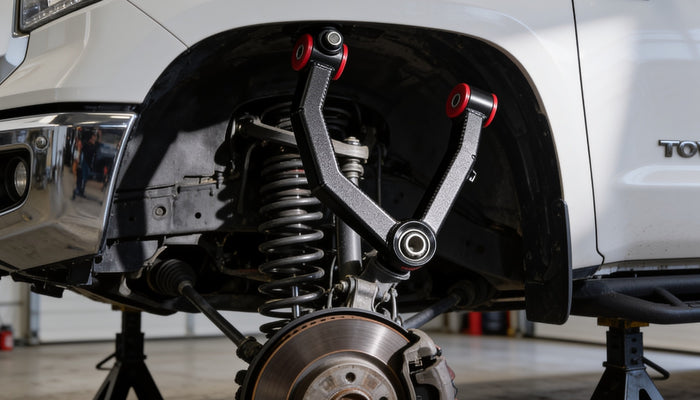
Upper Control Arms for the Toyota Tundra: Buyer's & Install Guide
Lifted your Tundra and been told you need aftermarket upper control arms? Here's why, how the top brands compare, and how to install them.
Read the guide ›
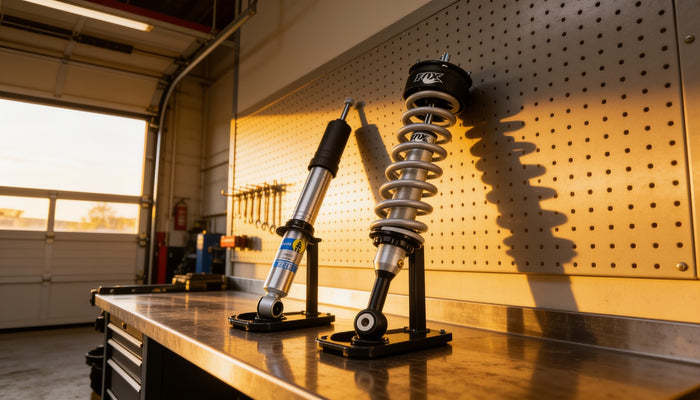
What Is the Difference Between a Coilover and a Strut?
Coilover or strut? Both use a spring and a shock, but they're built for different goals. Here's how they differ and which fits how you ac...
Read the guide ›
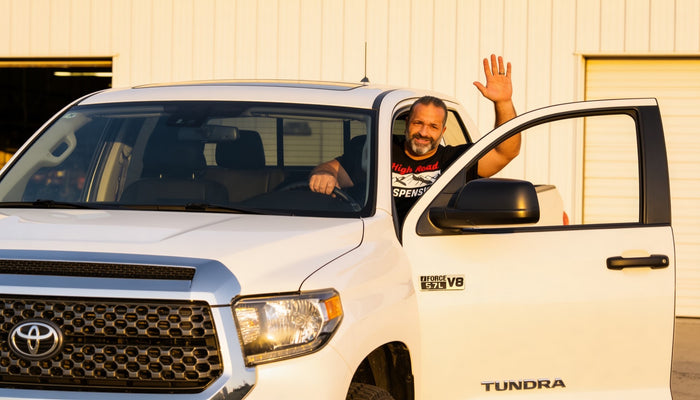
Bilstein 5100 Install Guide for Toyota Tundra
A full driveway install of Bilstein 5100 front struts on a Toyota Tundra, including the snap-ring lift settings for every model and the a...
Read the guide ›