
Explainer
Do You Need an Alignment After a Lift or Leveling Kit?
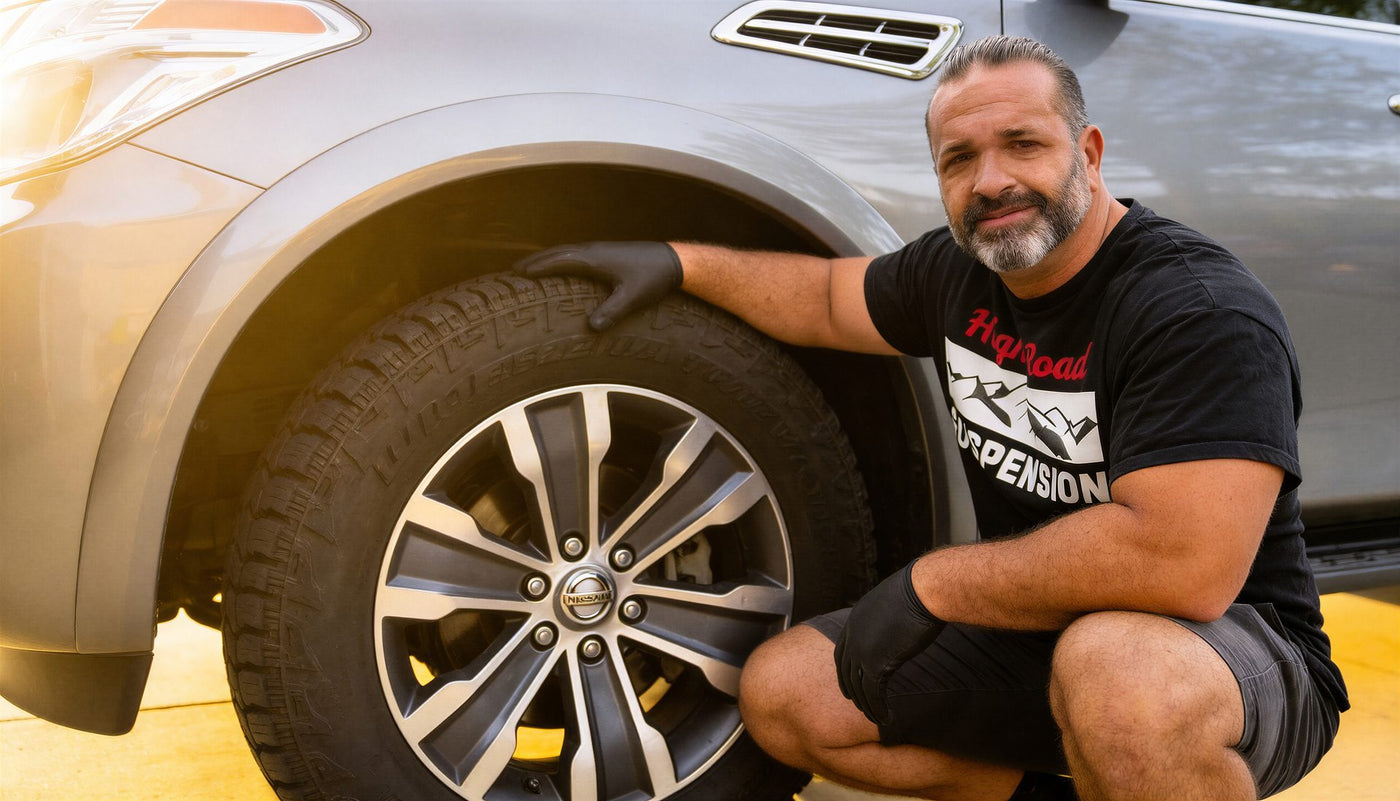
You just leveled or lifted your truck, and now there's the question nobody likes the answer to: do you need an alignment after a leveling kit, or is that just the shop trying to add to the bill? Here's the straight answer. Yes. Any time you change ride height, you need an alignment.
How much gets aligned depends on your truck. Most pickups ride on a solid rear axle, and a straight-axle truck only needs a front-end alignment after a height change. If your vehicle has independent rear suspension, the rear geometry moves too, so it needs a rear alignment on top of the front. Either way, raising the front end changes the angles your tires sit at, and those angles have to be reset.
Why alignment matters after a height change
Skipping the alignment doesn't break anything the day you drive off. It costs you slowly, in a few ways that add up.
The big one is tires. Misaligned wheels wear unevenly, and uneven wear means you're buying tires sooner than you should. On a set of 34s or 35s, that's not a small bill. A proper alignment keeps the tread wearing flat and even, which is the cheapest tire insurance there is.
Then there's how the truck drives. Correct alignment keeps the truck stable and tracking straight, and makes it easier to steer and control. That matters most in an emergency maneuver, where a misaligned truck can handle unpredictably right when you need it not to.
Alignment also touches fuel economy. When the wheels point where they should, there's less rolling resistance, so the engine isn't fighting the tires to move the truck. And good alignment takes stress off your suspension parts, so they don't wear out early and leave you with a bigger repair down the road. On top of all that, a straight-tracking truck with no pull is just more comfortable to drive, which you notice most on a long highway day.
Camber, caster, and toe, in plain English
An alignment is really three adjustments. Here's what each one means without the jargon.
Caster is the angle of the steering axis seen from the side of the truck, basically whether the wheel sits centered with the ball joints or pushed forward or back. It affects straight-line stability and how much effort it takes to steer.
Camber is the tilt of the wheel seen from the front or rear. Positive camber tilts the top of the wheel outward, negative camber tilts it inward.
Toe is which direction the tires point. It's the one that quietly eats your tires when it's off, so it's usually the first thing a good alignment dials in.
All three change when you alter ride height, which is why a lift or level sends them out of spec and a fresh alignment brings them back.
How worn ball joints throw off your alignment
Here's a piece people miss. A fresh alignment only holds if the parts holding your wheels in place are in good shape, and that comes down to your ball joints.
Ball joints allow controlled suspension movement, which is what keeps the wheels sitting in the alignment positions they were set to. When ball joints wear out or go loose, they introduce play into the suspension, and that play lets the wheels drift out of alignment on their own. The result is exactly what you were trying to avoid: toe, camber, and caster slipping out of spec, uneven tire wear, pulling to one side, and handling that feels vague. So before you pay for an alignment, it's worth knowing your ball joints are healthy, otherwise you're aligning a truck that won't stay aligned.
Parts that help dial in alignment
Sometimes a stock truck doesn't have enough adjustment range to get back into spec after a height change, especially once you've gone past a basic level. That's where alignment hardware comes in.
Camber and caster bolts are the simplest fix. The ones from SPC (Specialty Products Company) use a larger offset washer than most brands, which lets the lower arm move in and out with a twist of the bolt head to bring camber back in range.
For more adjustment, or for bigger setups, adjustable upper control arms are the move. SPC's arms use a ball joint that pivots in and out to adjust camber from the top. Icon's billet arms use heim ends instead, which can be lengthened or shortened for camber, and because each heim moves on its own, they also allow toe adjustment.
One platform-specific heads-up if you run a 2007-2021 Toyota Tundra: the factory camber bolt gussets are on the weak side. A gusset is what gives the camber bolt a boundary to move within, and under hard off-road use those bolts can spin and flatten the walls of the factory gussets. Dirt King makes heavier-duty gussets that hold up to that abuse, which is worth knowing before you beat on a lifted Tundra in the rough stuff.
So the answer to the question stands: align the truck any time you change its height. If your setup needs more adjustment range than the factory parts allow, the camber bolts and adjustable upper control arms above will get you there. Not sure which applies to your build? Take a look at our leveling kits and lift kits, read up on the difference in our guide to leveling versus lifting, and reach out if you want a second opinion on your specific truck.
Frequently Asked Questions
Do I need an alignment after just a leveling kit?
Yes. A leveling kit changes your front ride height, and any change in height moves your alignment angles out of spec. Even a small level should be followed by an alignment to protect your tires and keep the truck tracking straight.
My truck has a solid rear axle. Do I need a rear alignment too?
No. A straight-axle truck, which is most pickups, only needs a front-end alignment after a height change. Rear alignment comes into play on vehicles with independent rear suspension, where the rear geometry shifts when the height changes.
What happens if I skip the alignment?
The most common result is uneven, premature tire wear, which gets expensive fast on larger tires. You may also notice the truck pulling to one side, vaguer steering, and added stress on suspension parts that can lead to earlier repairs.
More Install Guides
Nissan Titan Suspension Lift Buyer's Guide
From leveling spacers to bracket lifts, every Nissan Titan lift option explained, plus the supporting parts you need for a safe, reliable...
Read the guide ›
Bilstein 5100 vs Fox 2.0 for the Toyota Tundra (2007-2021): Strut vs Entry-Level Coilover
Bilstein 5100 strut or Fox 2.0 coilover for your Tundra? A head-to-head on install, ride quality, adjustability, and which one fits how y...
Read the guide ›
Bilstein 5100 Install Guide for 2004-2024 Nissan Titan
A full driveway install of Bilstein 5100 front struts on a Nissan Titan, including the one washer mistake that can cause suspension failure.
Read the guide ›