
Explainer
Long Travel Suspension Explained: What It Is, What It Costs, and Whether It's Worth It
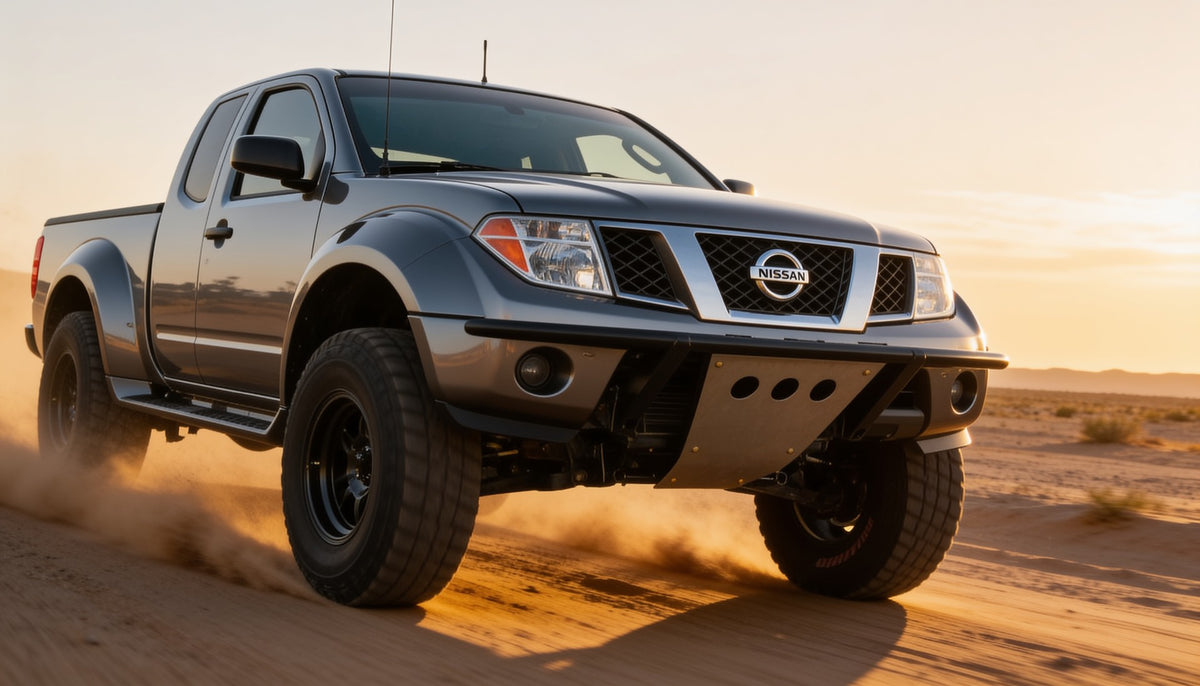
If you are new to off-road suspension, you have probably heard the term "long travel suspension" and wondered what it means.
Simply put, long travel suspension is designed to allow the wheels to move much farther up and down than they can with the factory suspension. This additional suspension movement allows a truck to travel faster over rough terrain while keeping the tires in contact with the ground.
But there is a lot more to a long travel setup than simply installing longer shocks. A true long travel build can require major modifications to the truck, and the cost can add up quickly.
So, what exactly is long travel suspension, what does it cost, and is it worth it for your truck?
What Is Long Travel Suspension?
To understand long travel suspension, it helps to first understand suspension travel.
Suspension travel is the distance a wheel can move upward and downward as the suspension works. When the wheel moves downward away from the vehicle, this is commonly referred to as droop or rebound travel. When the wheel moves upward into the vehicle, it is using its compression travel.
A factory suspension is designed around the dimensions and requirements of a production vehicle. A long travel suspension system changes those dimensions to allow substantially more wheel movement.
Long travel kits typically use much wider upper and lower control arms. These longer arms allow the wheel to travel through a much larger arc than the factory suspension. The result is a significantly wider front track width and substantially more wheel travel.
Why Are Longer Shocks Needed?
The control arms are only part of the equation. To take full advantage of the additional suspension movement, the shock absorber also needs to be able to physically extend far enough to accommodate that movement.
On many long travel builds, the factory upper coil bucket is removed and replaced with a shock hoop or shock tower. This allows a much longer coilover shock to be installed. A longer coilover can provide significantly more usable suspension travel than a factory-length shock.
However, installing a shock hoop is a major modification. Depending on the vehicle and the specific kit, it can require cutting, fabrication, and welding. Some long travel kits can retain the factory coil bucket, but doing so may limit how much of the available travel can actually be used.
What Happens to a 4x4?
There is another important consideration for four-wheel-drive vehicles.
Because long travel control arms move the front wheels farther outward, the front suspension's track width becomes substantially wider. The factory CV axles may no longer be long enough to accommodate the additional width and suspension movement.
Depending on the vehicle and kit, extended CV axles or axle extensions may therefore be required. This is one reason why a long travel suspension system is much more involved than simply installing a set of longer shocks.
Why Do Long Travel Trucks Use Fiberglass Fenders?
Once you widen the suspension, the tires move farther outward and can travel through a much larger arc when the suspension cycles and the steering turns. The factory fenders may no longer provide enough clearance.
This is why many long travel builds use fiberglass front fenders. Fiberglass fenders are generally wider than the factory sheet metal and provide the additional clearance needed for the wider suspension and larger range of tire movement.
For serious long travel builds, the front bumper may also be replaced with a tube-style bumper. This can provide additional tire clearance and improve the truck's approach angle when driving off-road.
However, fiberglass comes with some compromises, which we will discuss later.
What About the Rear Suspension?
Long travel is not just about the front of the truck.
To take full advantage of additional rear suspension travel, many builds use a rear shock hoop or bed cage that allows significantly longer shocks to be installed. This can require cutting the bed floor to provide clearance for the longer shocks and shock mounts. Many builds also use fiberglass rear bedsides to provide additional clearance for the tires as the rear suspension cycles.
Depending on the vehicle and the intended use, a long travel rear suspension may also include upgraded leaf springs, a leaf spring flip kit, bypass shocks, hydraulic bump stops, and other components designed to control the increased suspension travel.
What Is a Long Travel Truck Designed For?
This is one of the most important things to understand about long travel suspension.
Long travel suspension is not simply a more capable version of a stock suspension for every type of off-roading. A properly designed long travel truck is typically built for high-speed off-road driving over relatively open and rough terrain, such as desert roads and race-style terrain.
The goal is to allow the suspension to absorb large bumps, dips, and whoops while keeping the tires planted and the vehicle stable at speed. That is very different from building a truck specifically for tight trails, rock crawling, or maximum ground clearance.
What Does Long Travel Suspension Cost?
This is where things can get expensive. A basic long travel parts list can include:
- Long travel coilovers
- Long travel upper control arms
- Long travel lower control arms
- Limit straps
- Hydraulic bump stops
- Front shock hoops
- Bypass shocks
- Rear shock hoops or a bed cage
- Extended front axles or CV axles
- Rear bypass shocks
- Leaf spring flip kit
- Upgraded rear leaf spring pack
- Fiberglass front fenders
- Fiberglass rear bedsides
- Custom front and rear bumpers
The exact parts required vary significantly depending on the vehicle and the level of performance being built.
For a serious long travel build, the suspension components alone can easily approach $20,000 or more. And that is before accounting for some of the fabrication, bodywork, paint, and other supporting modifications.
Fiberglass Is Not Just a Bolt-On Upgrade
Fiberglass fenders can require considerably more work than simply removing the factory fenders and installing the new ones. They may require trimming, fitting, bodywork, mounting, and other adjustments to achieve proper panel gaps and a finished appearance.
If you want the fiberglass to match the rest of the truck, professional paint and color matching can add another $1,000 to $2,000 or more, depending on the vehicle and the quality of the work.
Custom Bumpers
Custom front and rear bumpers can also add substantial cost. A pair of properly fabricated custom bumpers can start around $3,000, with the final price depending on the design, materials, fabrication, finish, and whether additional features such as an integrated hitch are included. And depending on how extreme the build is, the final price can go considerably higher.
Is Long Travel Suspension Worth It?
The answer depends entirely on how you use your truck.
If your goal is to drive quickly through the desert over rough, relatively open terrain, long travel suspension can provide a dramatic change in the way the vehicle handles that type of terrain. But if your truck is primarily a daily driver, a weekend trail truck, or a vehicle used on tight wooded trails, the compromises of a full long travel build may not make sense.
The Trade-Offs of Long Travel
Your truck becomes much wider. Long travel suspension increases the vehicle's track width. That extra width is beneficial when driving quickly through open terrain, but it can become a disadvantage on narrow trails. A trail that was easy to navigate with a stock-width truck can become much more difficult when the truck is several inches wider. Trees, rocks, and other obstacles are also much closer to the vehicle's body.
Fiberglass is more vulnerable to damage. Fiberglass fenders are lightweight and provide the clearance needed for long travel suspension, but they are not as forgiving as factory steel body panels. They generally do not flex like steel. An impact that might dent a factory fender can crack or damage fiberglass. Over time, vibration and repeated flexing can also lead to stress cracks. For someone who regularly drives tight trails where branches, rocks, or other obstacles can contact the body, this is an important consideration.
You lose some bed space. Once a rear shock cage or shock tower is installed, the bed floor may need to be modified or cut to provide clearance for the shocks. This can reduce the amount of usable bed space and make the truck less practical for hauling certain types of cargo. For someone who uses their truck as a work vehicle, this can be a significant trade-off.
The build requires more maintenance and fabrication. A long travel truck typically has considerably more specialized components than a factory or mild suspension setup. Limit straps, bump stops, bypass shocks, coilovers, heims, extended axles, and other components all need to be properly installed, maintained, and periodically inspected. The fabrication also needs to be done correctly. Shock hoops, cages, and other structural components should be installed by someone who understands the loads placed on the suspension.
Towing can still be possible. A long travel suspension build does not automatically mean that towing is no longer possible. However, the vehicle's towing capability depends on the vehicle itself, the suspension configuration, the hitch, the bumper, and how the entire build is engineered. If a custom rear bumper incorporates a hitch, that hitch needs to be properly designed and rated for the intended towing load. The manufacturer's towing and payload ratings should also be considered before using a heavily modified truck for towing.
So, Who Is Long Travel Suspension Really For?
Long travel suspension makes the most sense for someone who specifically wants to build a truck for fast desert driving and high-speed off-road performance. It provides the additional wheel travel needed to absorb large bumps and rough terrain at speed, but achieving that performance requires significant changes to the truck.
For someone who primarily wants better ride quality on the street, more ground clearance, larger tires, improved capability on moderate trails, a comfortable daily driver, and occasional off-road use, there are other suspension options that can provide those improvements without the cost and compromises of a full long travel system.
The Bottom Line
Long travel suspension is a specialized system designed around a specific purpose: moving the wheels farther and controlling that movement at higher speeds over rough terrain. It is not simply a matter of installing longer shocks.
A complete build can involve wider control arms, longer coilovers, shock hoops, bypass shocks, hydraulic bump stops, limit straps, extended axles, fiberglass body panels, bed modifications, custom bumpers, and extensive fabrication. By the time everything is finished, a quality long travel build can cost $25,000 or more.
For the right type of off-road driving, that investment can completely transform the truck's capabilities. For someone who primarily drives on the street or navigates tight trails, however, the additional width, fiberglass bodywork, fabrication, reduced bed usability, maintenance, and cost are important compromises to consider.
The key question is not simply, "Is long travel better?" The better question is: "What do you want your truck to do?" Once you know how and where you plan to drive, you can choose a suspension system that matches those needs instead of paying for capabilities you may never use while sacrificing other things that may be important to you, like bed space for hauling.
Frequently Asked Questions
What is long travel suspension?
Long travel suspension is designed to let the wheels move much farther up and down than the factory setup allows, so the truck can travel faster over rough terrain while keeping the tires planted. It typically uses wider upper and lower control arms, which increases front track width and wheel travel well beyond stock.
How much does a long travel build cost?
For a serious build, the suspension components alone can easily approach $20,000 or more. Add fabrication, fiberglass bodywork, paint and color matching ($1,000 to $2,000+), and custom bumpers (starting around $3,000), and a complete quality build can reach $25,000 or more.
Why do long travel trucks use fiberglass fenders?
Widening the suspension pushes the tires farther out and through a larger arc, so the factory fenders may no longer provide enough clearance. Fiberglass front fenders are wider than factory sheet metal and create the room needed. The trade-off is that fiberglass does not flex like steel and can crack from impacts or vibration over time.
Is long travel suspension worth it?
It depends entirely on how you drive. For fast desert and high-speed open off-road driving, long travel can transform how the truck handles. For a daily driver, weekend trail truck, or tight wooded trails, the added width, fiberglass, reduced bed space, maintenance, and cost usually are not worth it, and other suspension options make more sense.
Can I still tow with a long travel truck?
Possibly. A long travel build does not automatically rule out towing, but capability depends on the vehicle, the suspension configuration, the hitch and bumper, and how the build is engineered. Any hitch built into a custom bumper must be properly designed and rated, and you should still respect the manufacturer's towing and payload ratings.
More Install Guides
What Is the Honest Trade-Off With a 6" Lift?
A 6-inch lift is not the same as 6 inches of ground clearance. Here is how bracket lifts and lift spindles actually create the height, an...
Read the guide ›

Best Struts, Coilovers, and Rear Shocks for a Nissan Titan XD
From budget Bilstein struts to premium King coilovers, here's how the suspension options for the Nissan Titan XD compare, and which one f...
Read the guide ›
How to Protect Your Coilovers and Shocks: Limit Straps, Bump Stops, and Covers
Your coilovers and shocks work hard and cost real money. Here's how limit straps, bump stops, and covers protect them through the full ra...
Read the guide ›